
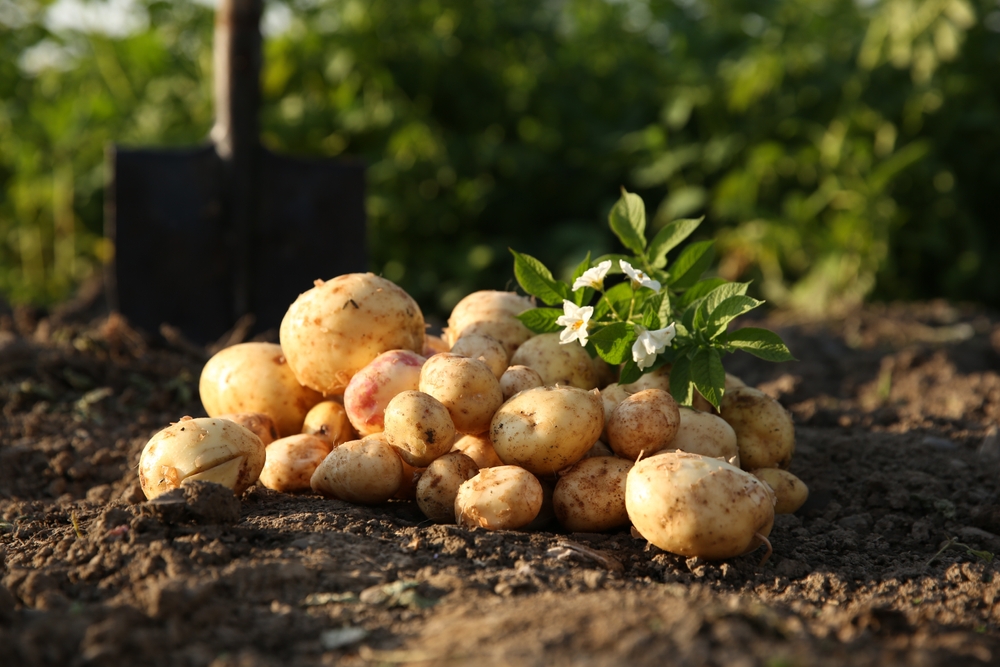
Potato diseases rarely begin where we first notice them. They start underground — in the soil, on emerging roots, and around developing tubers.
The visible symptoms we see above ground are often only the final stage of processes that began weeks earlier. For potatoes, one of the most soil-dependent crops in modern agriculture, early underground protection is not optional. It is foundational.
Potatoes: The Hidden Risk Below the Surface
Potatoes are uniquely exposed to soil-borne pathogens because the harvested product itself develops underground. From the moment seed tubers are planted, they enter a biologically complex environment filled with both beneficial and harmful microorganisms.
Pathogens such as:
- Rhizoctonia solani,
- Fusarium spp.,
- Pythium spp.,
- Phytophthora infestans,
- Helminthosporium solani
can infect roots, stolons, and young sprouts long before the crop emerges.
Early infections may result in:
- delayed or uneven emergence,
- weakened root systems,
- reduced tuber initiation,
- compromised yield potential.
Economic risk starts early. Damage to emerging sprouts cannot be fully compensated for later, lowering the yield ceiling before the season even truly begins.
This isn’t just a biological concern; it’s a direct financial risk. In potato production, the average yield loss due to early soil-borne stress is estimated at over 17%. By the time uneven stands become visible, buthe crop’s performance ceiling has already been lowered, permanently reducing the profit potential of each hectare.
Why Soil Biology Determines Yield Stability
Healthy potato crops depend on a balanced rhizosphere — the narrow zone of soil surrounding roots and developing tubers. This is where microbial competition, nutrient exchange, and plant signaling occur.
When soil biology is imbalanced, pathogens gain dominance. When beneficial organisms are present and active, the plant–soil system becomes more stable.
Biological protection works by influencing this balance early and preventively.
Rather than acting through chemical residues, biological solutions introduce living organisms that:
- compete with pathogens for space and nutrients,
- parasitize harmful fungi,
- stimulate natural plant defense mechanisms,
- contribute to microbial equilibrium in the soil.
This systemic approach aligns particularly well with potatoes, where underground health directly translates into final tuber quality.
Pythium oligandrum: Active Protection in the Rhizosphere
Pythium oligandrum is a naturally occurring soil microorganism developed by Biogama into practical biological solutions, including Polyversum® and targeted soil or seed-tuber formulations such as Polygandron TTP and Polygandron WP.
Once applied to seed tubers or soil, Pythium oligandrum becomes active in close proximity to emerging roots.
In potato systems, it:
- parasitizes pathogenic fungi in the soil,
- limits early infections of roots and stolons,
- root engine strengthens root architecture,
- enhances plant physiological resilience.
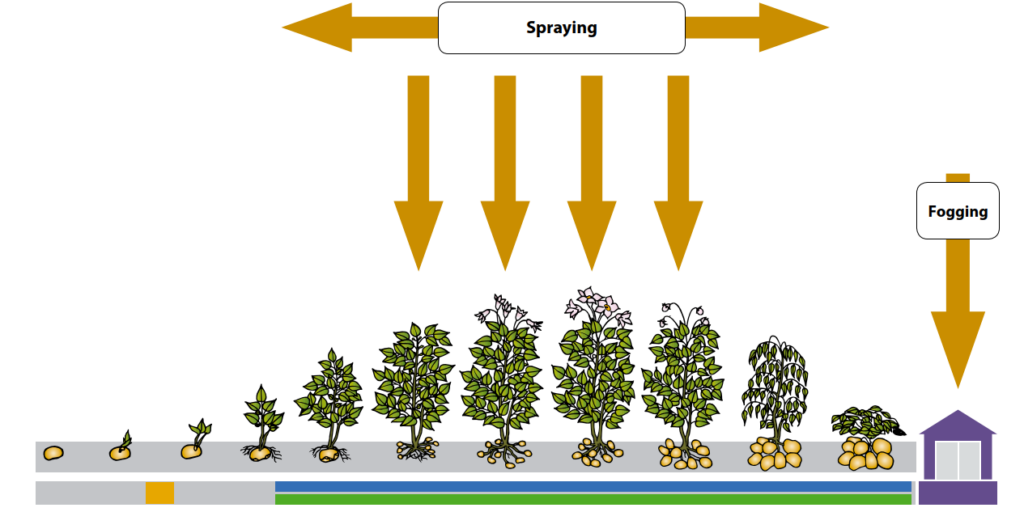
Unlike chemical seed treatments, this biological interaction leaves no residues and does not accumulate in the soil ecosystem. Instead, it works with natural processes.
Healthier Roots, Stronger Crops
Root health in potatoes determines more than early vigor.
It influences:
- the number of initiated tubers,
- uniformity of tuber development,
- nutrient uptake efficiency,
- stress tolerance later in the season.
When roots are compromised early, plants struggle to compensate. Conversely, crops that establish under balanced biological conditions maintain greater stability throughout vegetative growth and canopy formation.
- Early root protection improves stand uniformity: Consistent emergence is the first step to high yields.
- Balanced soil microbiology reduces pathogen dominance: Introducing Pythium oligandrum creates a competitive environment that crowds out harmful fungi.
- Stronger stolon development supports tuber initiation: More initiated tubers mean a higher potential for a top-tier harvest.
- Healthy rhizosphere activity enhances nutrient efficiency: Stimulated roots better absorb nitrogen, phosphorus, potassium, and boron.
This underground resilience often translates into more predictable yield outcomes — even under variable weather conditions.
From Emergence to Storage: Long-Term Effects
Early biological protection does not only influence emergence. Its effects continue through the entire production cycle. By suppressing pathogens like silver scurf (Helminthosporium solani) and dry rot (Fusarium solani) right from the start, the technology ensures:
- More uniform tuber sizing: Reducing underground stress prevents growth gaps.
- Improved skin quality: Essential for the premium fresh market.
- Better storability after harvest: Healthy tubers are less prone to storage rots and mycotoxin accumulation.
In potatoes, protecting the underground system is protecting the final product. When roots and tubers develop under stable biological conditions, the entire crop benefits from what we call the Root Engine — a biological surge that converts soil potential into profit.”
— Ivana Suchánková, MSc., CEO, Biogama
Integrating Biology into Modern Potato Programs
Biogama’s approach is a systemic upgrade, not a reactive substitute. Our solutions, including the innovative Polyversum OD formulation, are designed to:
- Complement chemical treatments: Filling the gaps where conventional fungicides are being phased out.
- The Zero-Residue Gate: Provide a path to harvest with 0% chemical residues and PHI 0 days, ensuring your crop meets the strictest retail standards.
- Strategic registration: With EU approval confirmed until 2038, Biogama provides the long-term certainty that agronomists can no longer find in old chemistry.
Root Engine: More Than Disease Suppression
Biological potato protection is about optimizing the plant–soil interaction through our Triple Action technology: Mycoparasitism, Induction of Resistance, and Growth Stimulation. When the Root Engine is active, potatoes demonstrate:
- Enhanced drought tolerance: Deeper and denser root hairs pull moisture from soil layers that untreated crops cannot reach.
- Proven Yield Boost: In Czech trials, this technology has delivered yield increases of up to 32% compared to untreated controls. Even in Florida’s challenging conditions, growers saw a 3% boost with minimal application effort.
Conclusion: True Protection Begins in the Soil
Potato diseases may become visible above ground, but they begin below it. By focusing protection efforts on roots, stolons, and soil biology, growers can influence the most critical phase of crop development — the one that defines yield potential long before harvest.
Biological solutions based on Pythium oligandrum M1 support potatoes exactly where they need it most: underground, at the start of the season.
Invest in certainty, not in residues.